Wire Mesh Decking: Converting Rack Beams into a Safe Load Surface
News Details
A wire deck is an important accessory for pallet racking. It creates a stable storage surface between two rack beams and supports goods across the full depth of each level.
Unlike an open beam level, a rack with wire decking can hold cartons, totes, small pallets, and other items that need more support. It also allows sprinkler water to pass through the mesh, making it a common choice for modern warehouses.
However, choosing the right wire deck involves more than checking its dimensions. Buyers also need to consider load capacity, beam profiles, support channels, surface finishes, and storage conditions.
This guide explains the main factors to help you select the right wire decking for your warehouse.
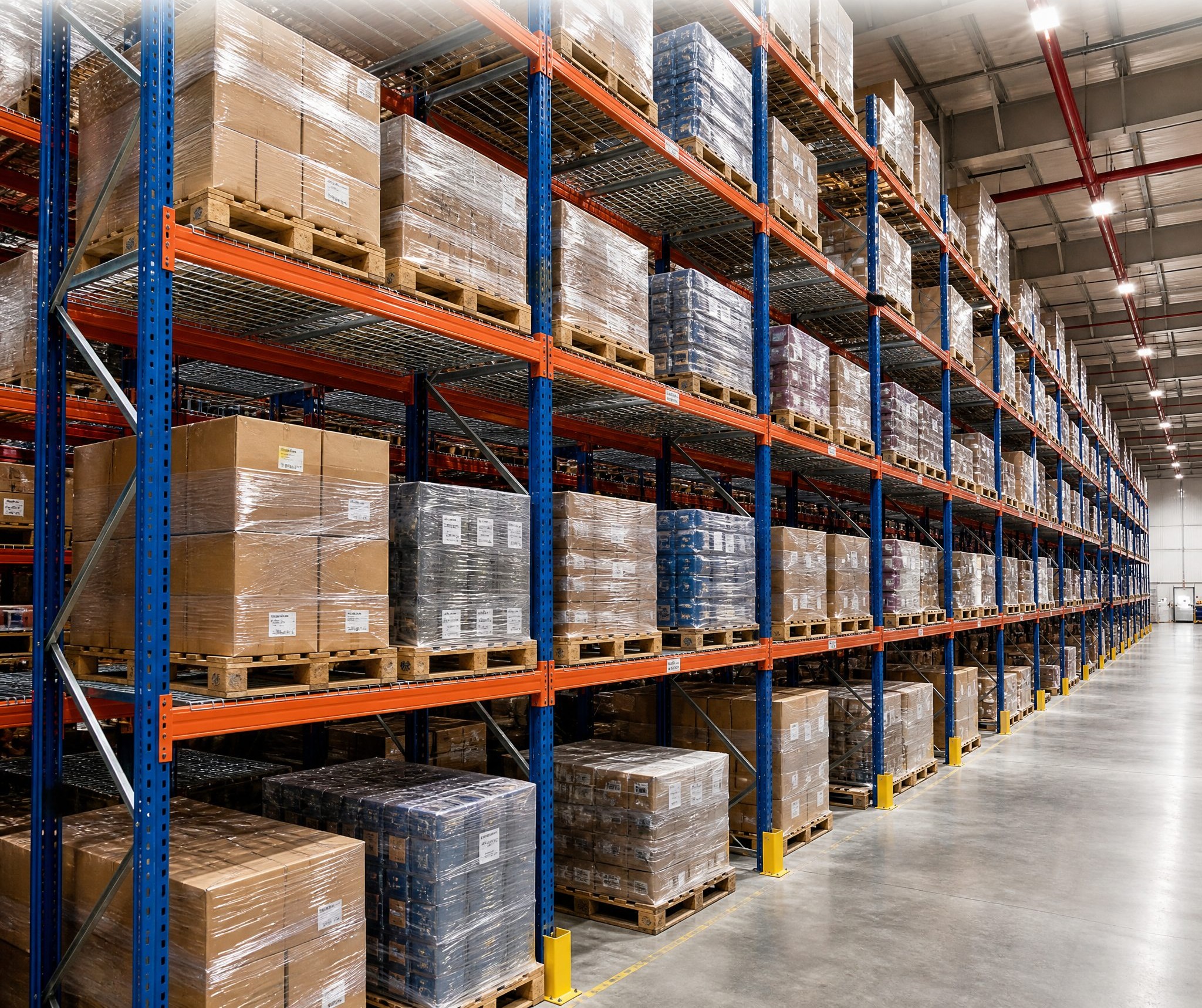 Wire mesh decking installed on every beam level of a high-bay rack, with palletized cartons resting securely on the surface.
What Is a Wire Deck?
A wire deck is a welded steel mesh panel installed between two pallet rack beams. It has support channels underneath that transfer the load to the beams.
Without a deck, pallets rest directly on the front and rear beams. With wire decking, the load receives additional support across the storage level.
Wire decks are useful for:
-
Storing cartons, totes, and loose items.
-
Supporting short or damaged pallets.
-
Storing mixed products on the same rack level.
-
Reducing the risk of small items falling through the rack.
-
Providing a more secure surface for manual picking.
Unionwade offers two wire decking options:
-
W-018 Standard Wire Deck: Designed for general pallet racking applications.
-
W-022 Heavy-Duty Wire Shelf: Designed for shelving applications that require a heavier-duty storage surface.
Both products use welded steel wire, rust-resistant finishes, and supporting channels. Their drop-in design also makes installation and removal convenient.
One important point: wire decking does not increase the overall load capacity of a rack. The beams and uprights still determine the rack's rated load.
Understanding Wire Deck Load Capacity
Wire deck load capacity is usually expressed as a uniformly distributed load (UDL). This means the maximum weight is spread evenly across the entire deck surface.
It does not mean the deck can safely support the same weight at one small point.
ANSI MH26.2 provides a testing basis for wire decking. Under this standard, the rated capacity is based on the lower of two results:
-
The load at a specified deflection limit.
-
Half the load at which the deck collapses.
Some panels certified under the Rack Manufacturers Institute program carry an R-Mark to indicate compliance.
When checking wire deck capacity, buyers should consider three factors:
Even load distribution
A UDL rating applies to evenly distributed weight. Heavy machinery, drums, and other concentrated loads may exceed the deck's safe capacity even when their total weight is below the printed rating.
Beam capacity
The deck and beam pair must have compatible load ratings. If the beams have a lower rating, they determine the safe working load of the rack level.
Actual storage conditions
The weight and contact area of stored goods both affect deck performance. Always consider how products sit on the mesh, not just their total weight.
Before ordering, confirm both the wire deck capacity and the beam pair's rated capacity.
Wire Mesh Decking vs. Solid Steel Decking
Wire mesh, solid steel, and timber decking offer different advantages. The right option depends on the warehouse environment and the products being stored.
| Feature | Wire Mesh Decking | Solid Steel Decking |
| Sprinkler water | Passes through the mesh | Blocks water unless ventilated |
| Visibility | Good visibility below the rack | Limited visibility |
| Dust and debris | Can fall through the grid | Collects on the surface |
| Small items | May need a liner or tray | Retains small items |
| Point loads | Requires careful load assessment | Spreads loads across a solid surface |
| Weight | Relatively light | Heavier |
| Common use | General pallet and carton storage | Small parts and spill containment |
Wire mesh decking is widely used because its open structure allows sprinkler water to pass through. It also improves visibility between rack levels.
Solid decking is more suitable when very small parts need a continuous surface or when goods require spill containment.
Perforated decking offers another option. It can retain smaller items while allowing some water to pass through. Buyers should check its open-area percentage before ordering.
Always review local fire codes and consult the sprinkler system designer before changing the decking type. Fire safety requirements vary by location and building design.
Common Wire Deck Edge Designs
The edge profile determines how the wire deck sits on the rack beams. Four common designs are available.
Double Waterfall Wire Deck
This is a common design for pallet racking. The mesh extends over the beam top and bends downward over both the front and rear faces. This helps secure the panel without bolts.
Inside Waterfall Wire Deck
The edges turn down into the step of the beam. This design keeps the front beam face clear, which is useful when barcode labels are attached directly to the beam.
Up-Turned Waterfall Wire Deck
Also called reverse waterfall decking, this design has an upward-bent rear edge. It helps prevent cartons and loose goods from sliding off the back of the rack.
Flush Wire Deck
Flush decking has no turned edges. It sits flat on the beams and relies on support channels and fasteners for secure installation. Its smooth surface is suitable for manual stacking and order picking.
The correct edge design depends on the beam profile. Measure the beams before selecting a wire deck.
Flared Channel vs. U-Channel Wire Deck
Support channels are installed underneath the wire mesh. They transfer the load to the rack beams and affect the panel's stiffness.
Two common channel designs are:
-
U-Channel (Step Channel): Designed to fit inside the step of a step beam. It provides additional contact between the deck and beam.
-
Flared Channel: Its ends are flattened and bent outward to rest on flat beam tops. It can fit box beams, structural beams, and step beams.
Inverted channels are another option. Their open sides face downward, reducing the areas where dust, food particles, and debris can collect.
Wire gauge and channel count also affect deck capacity. A heavier wire with fewer channels is not necessarily equivalent to a lighter wire with more support channels.
For replacement orders, match the original deck specifications rather than choosing a panel based on dimensions alone.
How to Choose the Correct Wire Deck Size
Correct measurements help prevent installation problems and unsafe support conditions.
Three measurements are especially important:
1. Frame Depth
Measure from the front face of the front beam to the back face of the rear beam. This determines the required deck depth.
For Unionwade's W-005 heavy-duty pallet racking, frame depths range from 800 to 1,000 mm.
2. Beam Span
Measure the clear distance between the inner faces of the two uprights. This determines the deck width.
W-005 rack bays range from 2,300 to 3,000 mm in length, with frame heights up to 10,500 mm. Two panels placed side by side are typically used to cover one rack level.
3. Beam Type
Identify whether the rack uses step beams or box beams. This determines the suitable channel and edge design.
For an accurate quotation, provide the following information:
-
Frame depth.
-
Beam span.
-
Beam profile.
-
Required load per level.
-
Type and arrangement of stored goods.
These details help ensure that the wire deck fits the rack and supports the intended application.
Wire Decking for Cold Storage and Humid Environments
Cold storage rooms and humid warehouses require decking with suitable drainage and corrosion resistance.
Wire mesh decking offers two main benefits:
Better drainage: The open grid allows condensation, defrost water, and wash water to pass through instead of collecting on the shelf.
Corrosion protection: Galvanized wire decks have a zinc coating that helps protect the steel from rust, including at scratched areas.
Galvanized finishes are often preferred for freezers, chilled storage, and humid production areas. Painted finishes are more suitable for dry warehouses where color coding is important.
Also consider the weight of stored goods. Ice that builds up on the mesh or products can increase the total load and affect safe capacity.
Point Loads: An Important Factor in Wire Deck Selection
A wire deck rated for UDL may not support the same weight when the load is concentrated in a small area.
Common examples include:
-
Machinery supported by four small feet.
-
Drums and pails resting on narrow rims.
-
Two-board pallets that transfer weight along two lines.
-
Pipes, steel bars, and other long materials creating line loads.
These loads place pressure on a smaller part of the mesh.
To reduce the risk, buyers can use pallet support bars, add a suitable board beneath the load, or choose a solid panel designed for the application.
If a deck remains bent after the load is removed, it should be replaced. A visibly damaged panel should not be returned to service by simply straightening it.
Wire Deck Inspection and Replacement
Regular inspection helps maintain safe warehouse storage conditions.
Check these areas during rack inspections:
-
Support channels: Look for bent or bowed channels.
-
Wires and welds: Check for broken wires, damaged welds, and gaps.
-
Surface finish: Look for rust, pitting, or coating damage.
-
Panel seating: Make sure the deck sits correctly on both beams.
-
Fasteners: Check that flush and inside-waterfall panels are securely fastened.
-
Load rating: Confirm that actual loads do not exceed the deck's rated capacity.
Damaged decking should be replaced rather than repaired. Straightening a bent panel does not restore its original tested load capacity.
Choose the Right Wire Deck from Unionwade
Choosing the right wire deck helps improve storage safety, product support, and warehouse efficiency.
Unionwade provides wire decking solutions for different rack systems and storage needs:
-
W-018 Standard Wire Deck: For general pallet racking applications.
-
W-022 Heavy-Duty Wire Shelf: For shelving applications.
-
W-005 Heavy-Duty Pallet Racking: Compatible rack systems with specified bay dimensions.
Unionwade also offers fully galvanized detachable racks with wire mesh decking.
When requesting a quotation, provide your rack dimensions, beam type, required load capacity, and storage conditions. This information helps identify a suitable wire deck configuration for your project.


