Product Introduction
UNIONWADE supplies customized drive-in pallet racking systems for high-density warehouse storage. Explore heavy-duty steel frames, support rails, and multi-level pallet storage solutions.
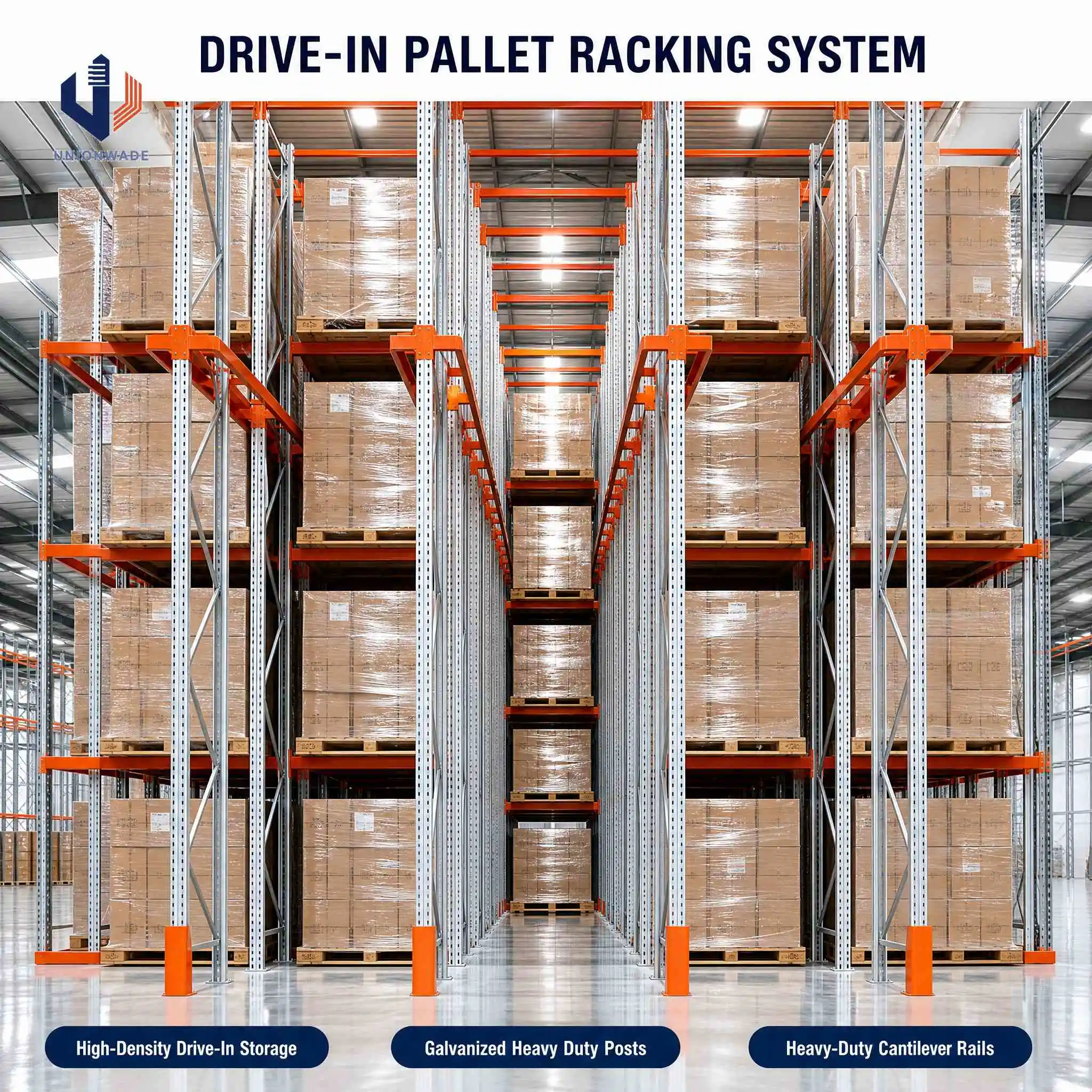


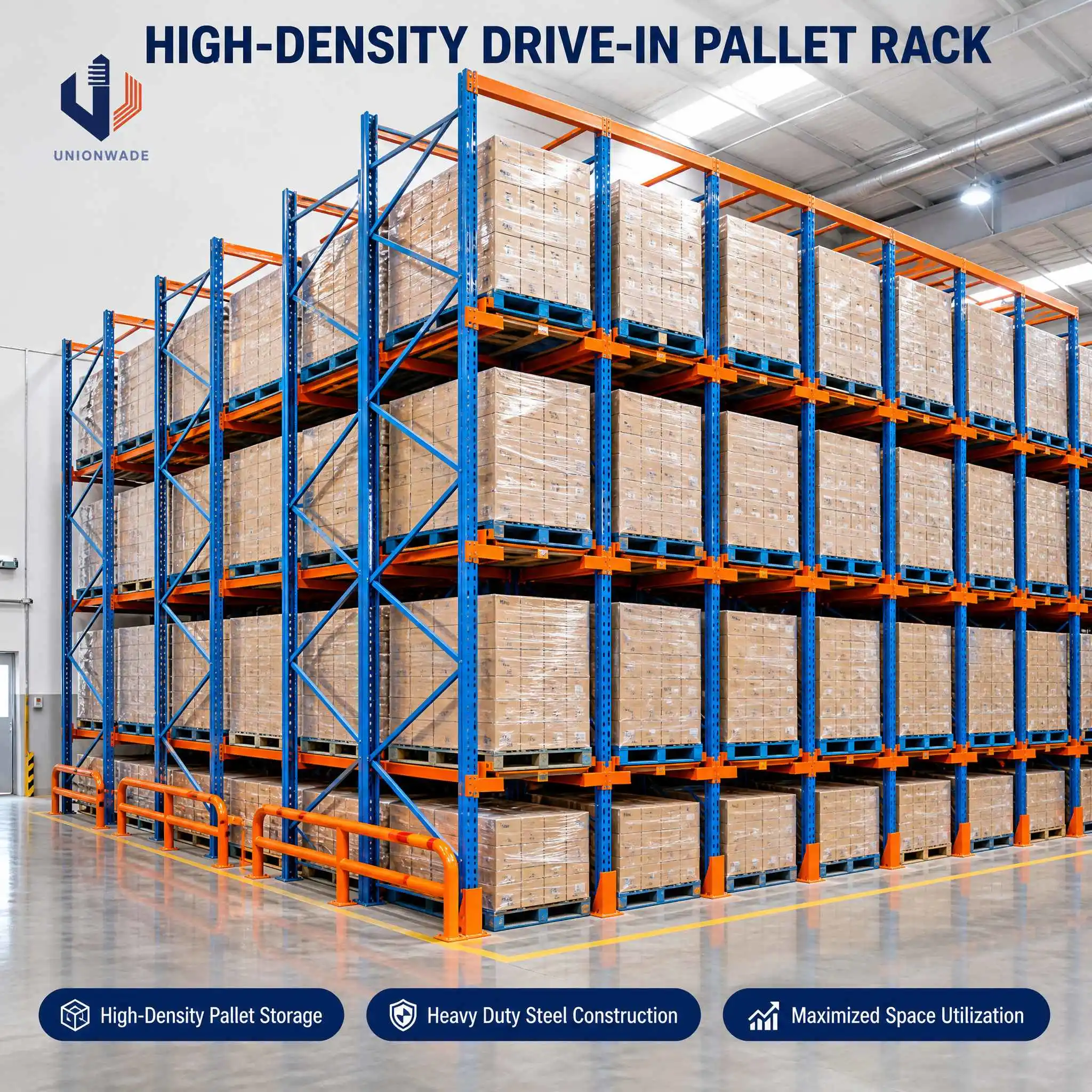
The Drive-In Pallet Racking System is a heavy-duty warehouse storage solution designed for high-density pallet storage. It allows forklifts to drive into the rack structure and place pallets along deep storage lanes, making it possible to store more goods within a limited warehouse area.
Unlike conventional selective pallet racks, drive-in racking does not require a separate forklift aisle for every storage row. Instead, forklifts enter the storage lanes from the access side and place pallets on support rails at different levels.
The system consists of upright frames, horizontal support rails, top and rear bracing, and other structural components. Its layout and dimensions can be customized to match pallet specifications, forklift operation, and warehouse conditions.
Drive-in pallet racking is generally operated on a First-In, Last-Out (FILO) basis. It is suitable for warehouses storing large batches of similar goods with relatively few product types.
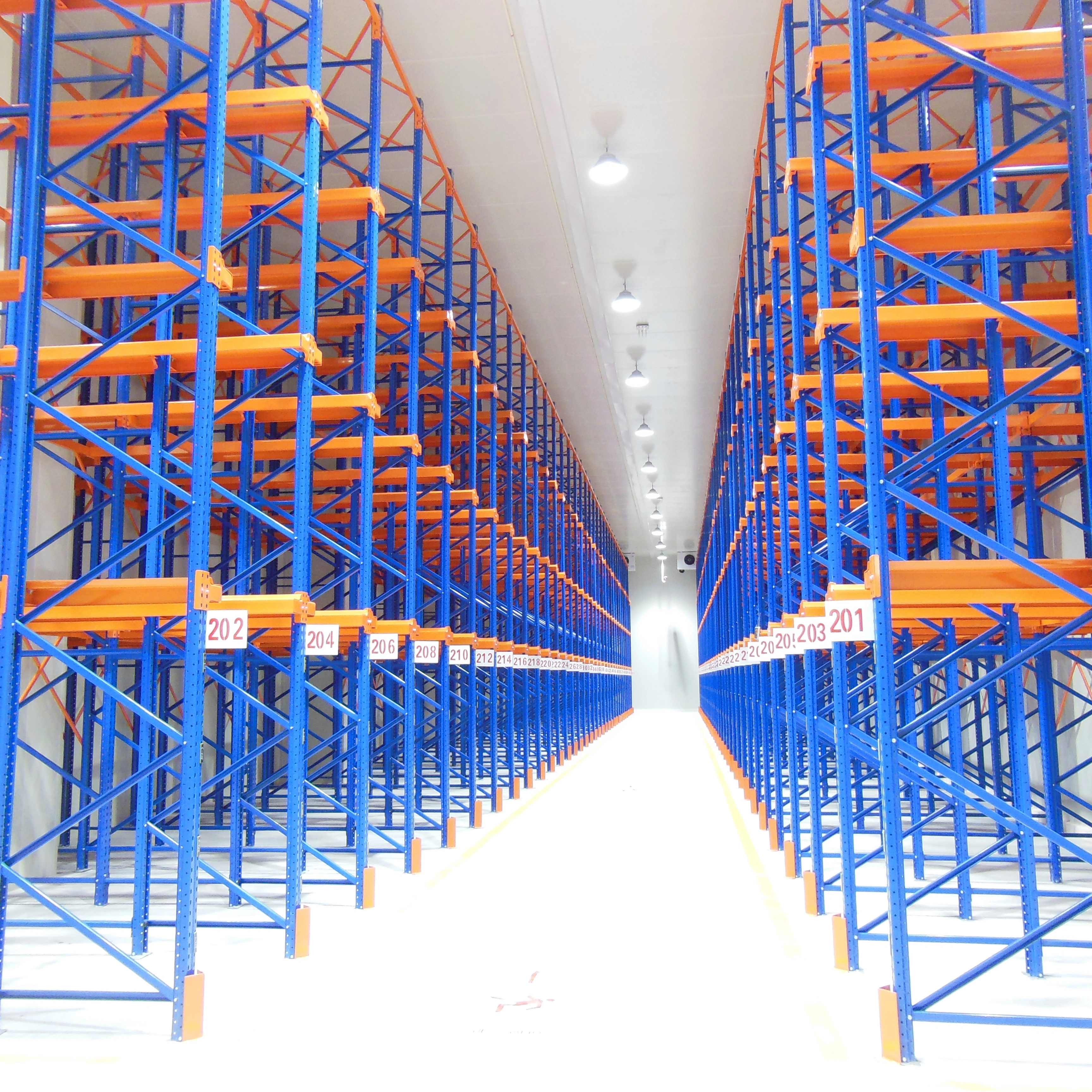
The system uses deep storage lanes to accommodate multiple pallets in a row. This reduces the number of access aisles and increases the available storage area.
The upright frames form the main structural support of the racking system. Their dimensions and configuration are designed according to the required storage height, pallet load, and overall system design.
Horizontal support rails hold pallets at each storage level. Their positioning and specifications can be designed to suit different pallet sizes and load requirements.
Forklifts can enter the rack lanes to load and retrieve pallets. The lane layout and operating clearance should be matched to the forklift model and handling method.
The system can be designed with several storage levels to make better use of vertical warehouse space. The number of levels depends on building height, pallet dimensions, and load requirements.
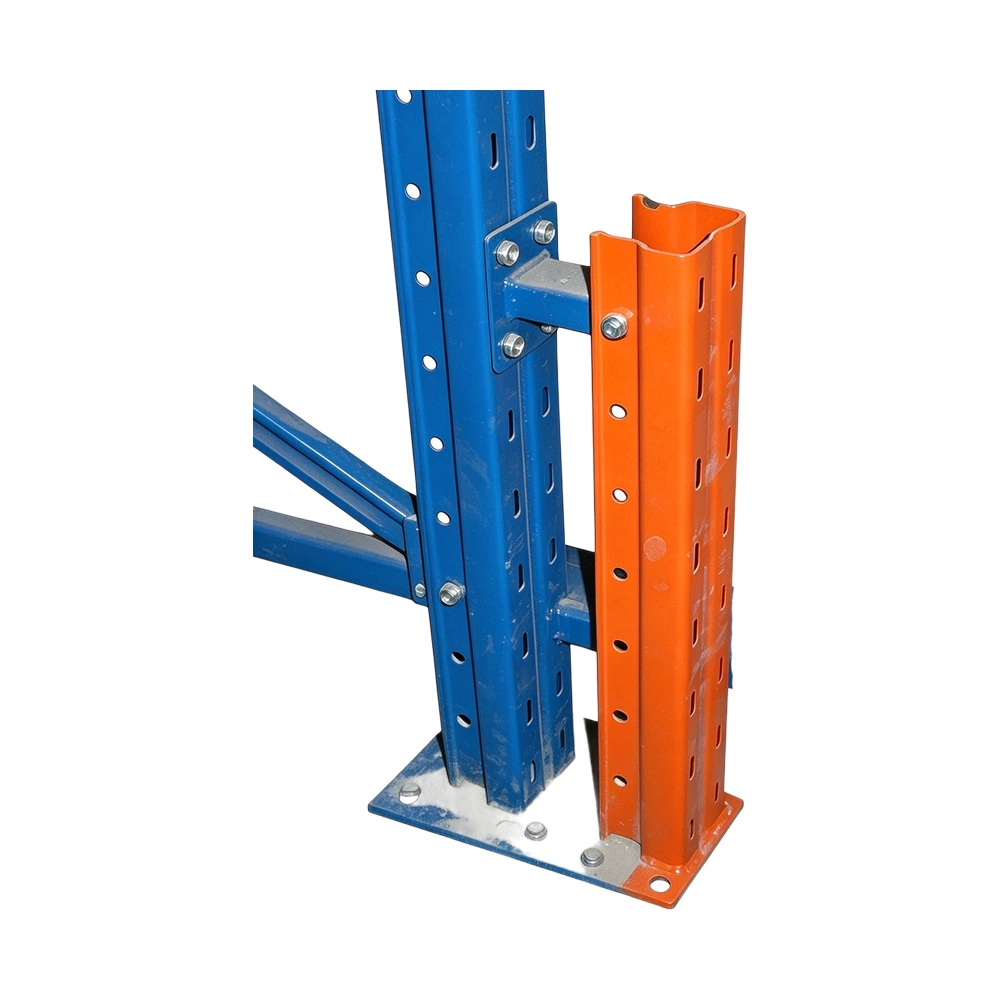
Optional accessories, such as upright protectors, guide rails, and other protective components, can help improve operational safety and reduce the risk of impact damage.
Drive-in pallet racking uses a simple loading and retrieval process.
Step 1: Forklift Entry
The forklift enters the designated storage lane from the front access side.
Step 2: Pallet Loading
The forklift places the pallet onto the support rails at the required storage position. Pallets are normally loaded from the innermost position outward.
Step 3: Multi-Level Storage
Additional pallets can be placed at different storage levels according to the rack design and operating requirements.
Step 4: Pallet Retrieval
Pallets are retrieved in reverse loading order. This means the last pallet loaded is generally the first pallet removed, following the FILO principle.
This operating method makes drive-in racking suitable for bulk storage, but it is less suitable when every pallet needs direct and independent access.
Improved Storage Density: Deep-lane storage reduces the number of forklift aisles.
Better Vertical Space Utilization: Multiple storage levels make use of available warehouse height.
Heavy-Duty Performance: Steel upright frames and pallet support rails provide a structured solution for palletized goods.
Customized Storage Layout: Lane depth, rack height, storage levels, and dimensions can be planned for different warehouse requirements.
Suitable for Batch Storage: An effective option for products with high quantities and relatively low SKU variety.
Drive-in pallet racking systems are commonly used in facilities that require compact and high-density pallet storage.
Typical applications include:
Cold storage and freezer warehouses
Food and beverage distribution
Manufacturing plants
Automotive parts storage
Industrial raw material warehouses
Wholesale and distribution centers
Bulk product storage facilities
For cold storage projects, reducing the number of aisles can help make better use of expensive refrigerated warehouse space.
UNIONWADE offers customized drive-in pallet racking systems for different warehouse layouts and storage operations.
The system can be configured according to:
Warehouse height, width, and available floor area
Pallet length, width, and height
Maximum pallet load
Number of storage levels
Storage lane depth
Forklift type and operating clearance
Upright and support rail specifications
Surface finish and rack color
Safety guards and protective accessories
Each system should be designed based on actual load calculations and warehouse operating conditions. This helps ensure that the selected structure matches the project's storage and handling requirements.
A well-designed drive-in pallet racking system can help improve storage capacity and make warehouse operations more organized.
UNIONWADE provides warehouse racking solutions with customizable dimensions, configurations, and finishes. We work with customers to understand their pallet specifications, storage needs, and forklift operations before recommending a suitable system.
Whether you need a new drive-in rack installation or an upgrade to an existing warehouse, UNIONWADE can support your project with a tailored storage solution.
It is a high-density storage system that allows forklifts to enter rack lanes and store pallets on support rails. It is designed to increase pallet storage capacity while reducing the number of access aisles.
Drive-in racking usually has one access side and follows the FILO principle. Drive-through racking allows forklift access from both ends and can support FIFO operation when properly managed.
The forklift must be suitable for entering the storage lanes and handling pallets at the required height. The rack layout should be designed around the forklift's dimensions, turning requirements, and operating clearance.
Lane depth depends on pallet dimensions, forklift operating conditions, load requirements, and the overall structural design. The appropriate depth should be confirmed during project planning.
No. It is most suitable for warehouses storing large quantities of similar products with limited SKU variety. If frequent direct access to individual pallets is required, selective pallet racking may be a better option.
Need a reliable pallet storage system for your warehouse?
Contact UNIONWADE with your warehouse dimensions, pallet specifications, load requirements, and forklift information. Our team can help you plan a drive-in pallet racking system that fits your storage needs.